Blog

Early Detection – Early Intervention and Inclusive Education project in Cao Bang close

In the past 18 years, the project Early Detection – Early Intervention (ED-EI) and Inclusive Education project implemented by MCNV in Cao Bang province has practically benefited the locality in various aspects.

A classroom of the Support Center in Cao Bang.

The project is part of the Disability program kick started in April 2002 by MCNV in Cao Bang province, aiming to achieve three goals: (1) Capacity building for officials and teachers in ED-EI and education for Children with Disabilities (CwDs), (2) Enhancing the capacity of participatory authorities, especially the provincial Support Center for the development of Inclusive Education, equipping the Center with sufficient resources and expertises to adequately provide qualified services to CwDs in the province; (3) Fostering the capacity of systems that support and implement ED-EI for CwDs.

In order to achieve these goals, the establishment and development of the Support Center is regarded as the key component of the project.

After 18 years, the project was concluded in late 2020 and has already been handed over to Cao Bang provincial Department of Education and Training. In the project closing workshop held in late March 2021, Head of Cao Bang provincial Department of Education and Training, Mr.Vu Van Duong and Prof.Dr. Le Van Tac, independent specialist who was in charge of the project final term evaluation, shared impressive figures and facts.

Breaktime on the Support Center’s yard.

According to the report, the Project has largely contributed to the vast increase of the percentage of CwDs attendance to school (from nearly 30% in 2002 to 89.1% in 2020). Currently, in Cao Bang province, 372 education institutions (among 503 preschools, primary schools, secondary schools,) are admitting CwDs.

Since the establishment of the Center, a total number of 560 CwDs have been admitted to the Center to be provided with necessary interventions, rehabilitation services and training on preschool skills, of which 453 students (80%) have been admitted to common schools. Meanwhile, 560 respective parents have been provided with consultancy services, helping them improve understanding of their children’s conditions, capabilities and manage to take better care of their children. 

As part of the project, thousands of screening, evaluation and training sessions were conducted, benefiting school officers, teachers and parents of CwDs across the province.

Infographic: The project outcomes

According to the report, in over the past 18 years, the project has created significant impacts on the development of the special education system, including accelerating the enforcement of Laws on Persons with Disabilities in Cao Bang, a mountainous province with distinctive cultural and social patterns , and predominant population of ethnic minorities.

Particularly, the establishment and stable operation of the Support Center has contributed to increasing equitable opportunities for CwDs in ED, EI and inclusive education.

In terms of policy, the project has produced and disseminated evidence-based results and examples to lay a essential foundation for relevant authorities to enact Laws on Persons with Disabilities. Thanks to the project, evidence-based research results and case studies have been generated and widely disseminated, laying solid foundation for the enactment of the Laws on Persons with Disabilities and policies at national and provincial level.

A teacher teaches students in the Support Center.

In addition to directly benefiting CwDs, their parents and teachers, the project benefited other stakeholders in terms of personal development via providing learning opportunities in reporting, human resources, project management, etc.

The model is evaluated as highly feasible in disadvantaged mountainous provinces. Cao Bang province experiences are suitable to be applied to other provinces, especially in mountainous regions.

*Stakeholders’ Testimonials:

“We highly appreciate the long-term commitment, professional and enthusiastic support of MCNV for the education sector of Cao Bang in early detection-early intervention and special education. MCNV has played the most important role in making the Disability program successful here. 18 years of support by MCNV is a long journey. It’s hard to have such a long-standing and close relationship like that.”  (Leader of Cao Bang provincial Department of Education and Training)

“MCNV works in a professional manner with great expertise, which made every supporting activities efficient and suit the needs of the locality and the beneficiaries.” (Officer of Cao Bang provincial Department of Education and Training)

“The percentage of CwDs attending school has been on the rise while the number of dropout decreases. The coordination between school and family is getting more effective, which is considered an outcome of the project.”   (Management of local common school admitting CwDs)

“With the aforementioned outcomes, MCNV realizes that it is the time to hand over the project to Cao Bang Department of Education and Training. The Department is now ready to take charge of the next phase to make the best out of the past achievements, helping CwDs better integrate into the community and ensuring the implementation of their rights”.   (MCNV representative)  

Read more

EU Delegation visits PROSPER project site (April 2021)

On April 14th & 15th 2021, a delegation of the European Union (EU) visited three districts of Hai Lang, Huong Hoa and Cam Lo of Quang Tri province, where the EU-funded project “Promoting sustainable partnerships between CSOs and enterprises for sustainable forestry management in the context of climate change” (PROSPER) has been implemented by MCNV and partners for over the past one year.

Ms. Camille G. Lavirotte, (Deputy Head of Finance, Contracts & Audit, Attachée), (fourth, right); Ms. Hong Anh Nguyen (Programme Manager) (fifth, left); Ms. Thuy Ngoc Dinh (Finance & Contracts Officer) (fourth, left); MCNV staff and SFCG Quang Tri.

The field trip aimed to provide the EU Ddelegation and MCNV the insight of the first-year achievement of PROSPER via visits to various forest plantations, natural forests and plant nursery of Quang Tri Smallholder Forest Certification Group (SGCG) Association, and participating cooperatives, including pine and acacia plantation of Phu Hung Cooperative (Hai Le commune, Hai Lang district) and hi-quality acacia nursery of Keo Son cooperative (Cam Nghia commune, Cam Lo district).

During the field trip, the EU delegates met with leaders of SFCG sub-associations, community forest groups and households who were beneficiaries of the PROSPER project in Ho village (Huong Son commune), Chan May Eco Bio Agricultural Cooperative and Chenh Venh village (Huong Phung commune) in Huong Hoa district.

Ms. Hong Anh Nguyen (left), Programme Manager, EU Delegation to Vietnam visited Phu Hung cooperative, Hai Lang district.

Leaders of these sub-associations and groups took the chance to brief the EU Ddelegation on the activities they have been participating in as part of the PROSPER project in the last one year, including: setting out sustainable forests management rules and regulations, forest patrol and audit in combination with forest nourishing, exploiting non-timber forest products, etc.

Chenh Venh village forest group representative briefs the EU Delegation on the group’s current activities and plan in the time to come.

At the same time, representatives of the project beneficiaries shared with the EU delegates and MCNV about their action plans in the coming years, focusing on sustainable forest management and community livelihood development, expansion of the plantation area of tung trees (an indigenous plant with various economic potentials), participation in the sustainable tung oil supply chain, enhancing the community coordination in Forest Stewardship Council certification (FSC®) rattan and bamboo trade, eco- tourism, etc.

The hi-quality acacia nursery of Keo Son (Cam Nghia commune, Cam Lo district).

PROSPER, with a total value of EUR 800,000 (EUR 600,000 funded by EU and EUR 200,000 by MCNV), is implemented by MCNV and the SFCG Association of Quang Tri in the period of February 2020 – February 2023.
The project will assist 60 sub-associations of around 3,000 farmers who are household, cooperative and community forest owners. In the 3 years, the project will help 1,500 hectares of plantation forests achieve FSC® certificates and sustainable forests management will be applied on 600 hectares of natural forests.

After the first one year, despite the challenges brought about by COVID-19, various key activities of PROSPER has been successfully implemented, including: assisting the participation in the FSC forest certification to implement sustainable forest management, promoting sustainable supply chain of non-timber forest products, establishing an acacia nursery, expanding the area of forest plantation, facilitating access to the smartphone application of the SFCG Association for forest management, etc.

*Infographic: PROSPER first-year achievement

Read more

Together in action for mother and child!

Safe childbirth and growing up healthy in Nong and Sepone

In 2006, a group of Laotian health professionals saw what MCNV employees in Vietnam managed to achieve. Also on their side of the border there were many health problems and they asked MCNV for  help. That was the beginning of our cooperation in the border district of Nong in Laos, ‘diseases do not stop at the border’. Since then, Nong has already better sanitation, drinking water and better nutrition. But good care for mother and child has been left behind, too many women and babies die during or after childbirth. There is insufficient knowledge about safe childbirth and women do not know where to go for help and advice during and after pregnancy.

Village health workers in the lead

We came up with a plan for Nong and the nearby district of Sepone, where the load of experience we gained in Nong now comes in handy. We want to train the village health workers in how to take care of pregnancy and childbirth, in postnatal care and good and sufficient nutrition for (pregnant) women and children. Village health workers are close to the people, speak the local language, know the traditions and recognize the difficulties from their own experience. Having faith in village health workers ensures that mothers will follow the advice and feel supported in the care of the family.

First aid in every village

The more than 150 villages in Nong and Sepone are located in a hard-to-reach area. If something goes wrong during or after childbirth, a care worker from the district health center will never get to the village in time. By in each village teaching a village health worker a number of lifesaving procedures, there is (emergency) aid close by and we reduce the chance of death during or after childbirth.

Support the women and children in Nong and Sepone!

With an amount of € 20,000, we can train 158 village health workers in Nong and Sepone so that the women in the villages can give birth safely and the baby and child mortality, which is now far too high, can quickly decrease. We use some of the money to help young mothers with a first advice on healthy nutrition for their babies and small children to get a chance to grow up healthy. This is a beautiful plan that we would very much like to take further, together with you!

On behalf of our team: Thank you very much for your (extra) contributions!
Karin Vlug

Read more

Home-based job benefits poor women in Ben Tre

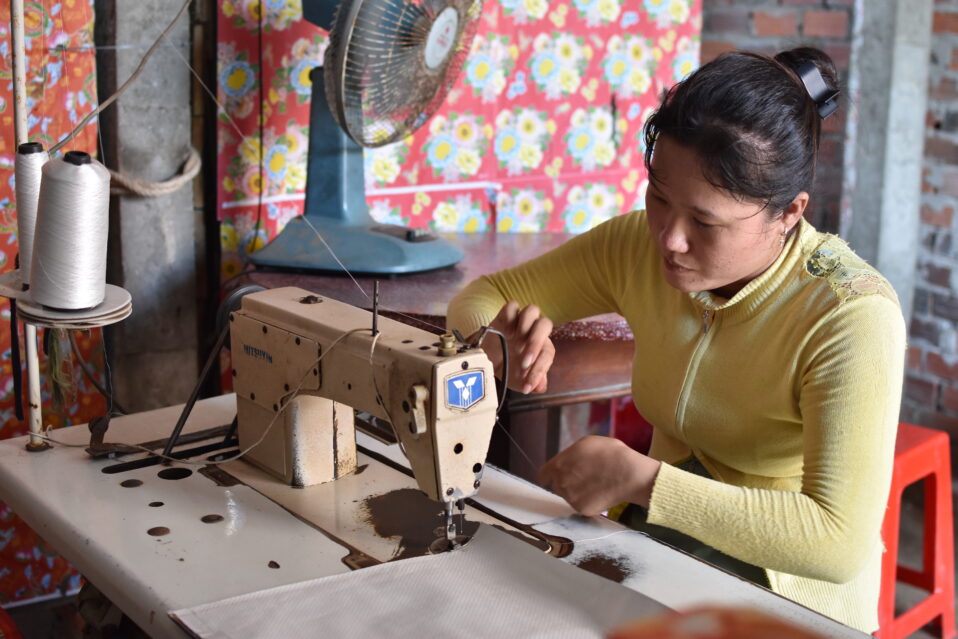
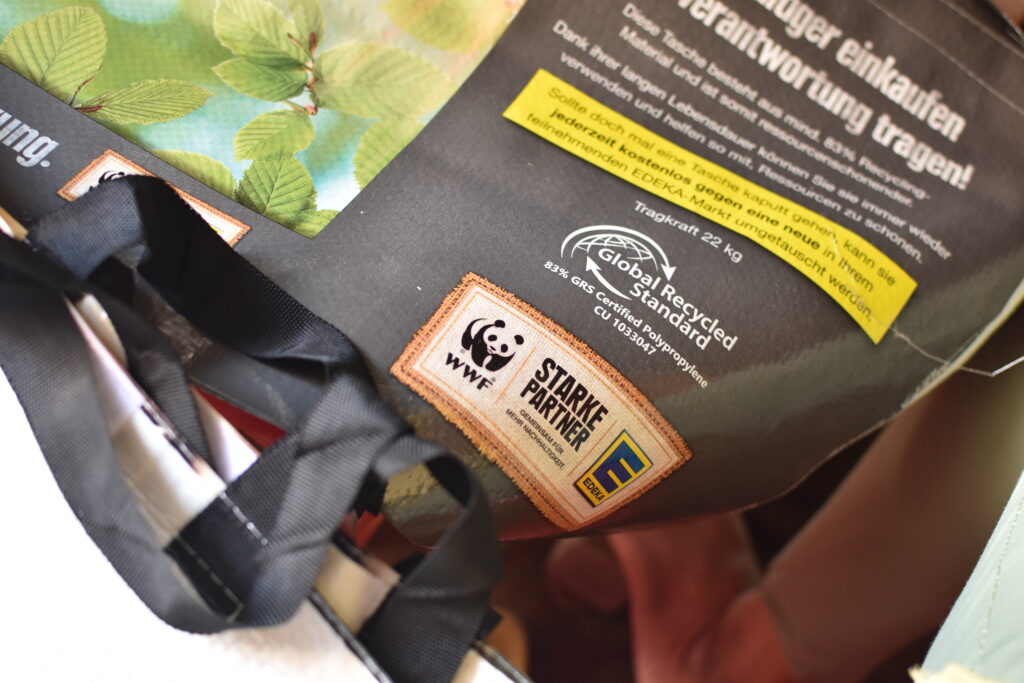
Strong, durable, and reusable, tote bag is becoming a popular choice of shoppers nowadays. Day by day, those eco-friendly products are being produced by diligent home-based worker like Ms. Vo Thi Ngoc Trinh (Binh Dai district, Ben Tre province).

A bag made by Trinh.

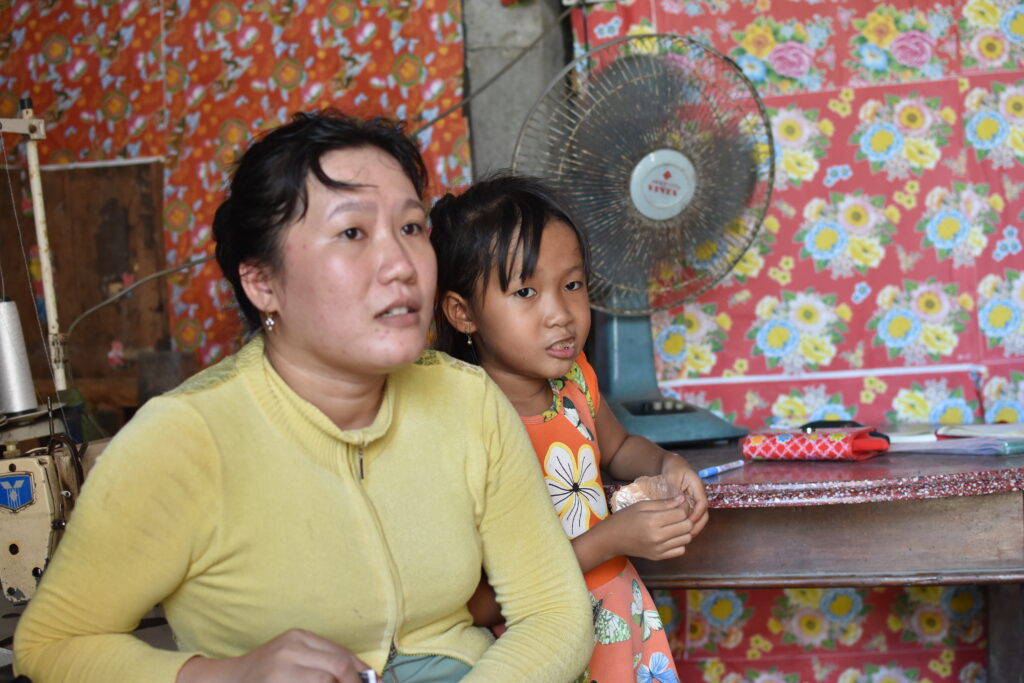
Ms.Trinh is a resident of Loc Thanh hamlet, Loc Thuan commune. She is married and has a 7-year-old daughter. Trinh’s husband is a mason, who often travel far from home to work. For a woman who has to balance between her income-earning activities alongside childcare and domestic responsibilities like Trinh, a home-based job is the most suitable choice.

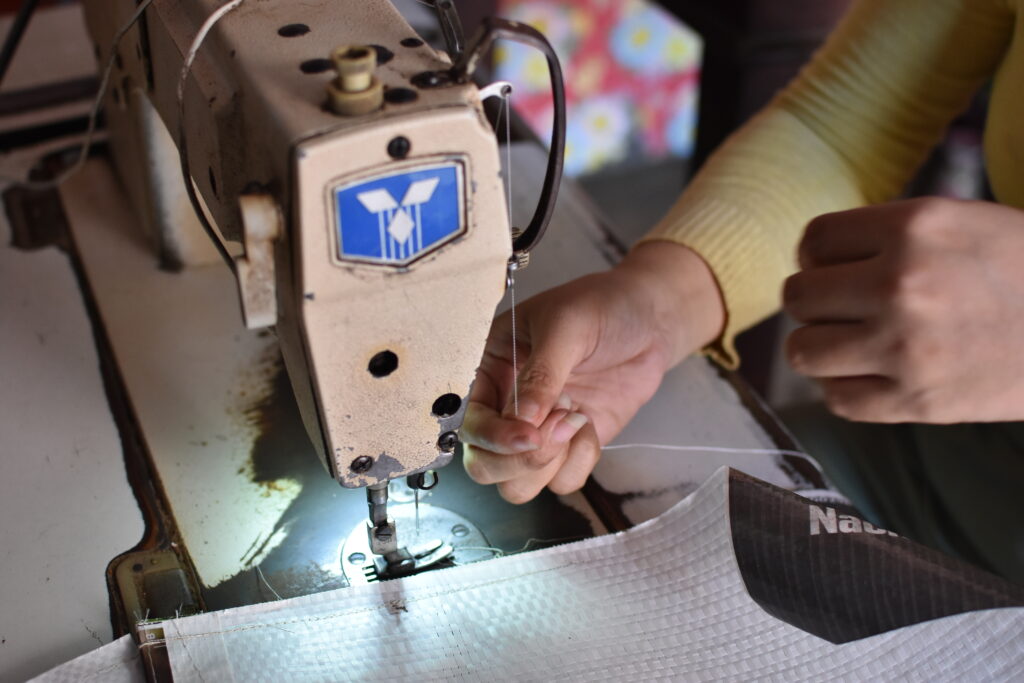
“As a member of a local Microcredit group, I got access to a loan worth VND 7 million (~EUR 270) to purchase a sewing machine. Thank to it, I started working from home as a tote bags maker since 2020”, Trinh said, while putting together pieces of cloth and carefully stiches.

Trinh has been outsourced by a local factory through an intermediary. Every week, the intermediary visits her one to two times, to collect the finished products and supply extra materials. The money Trinh earned depends on the quantity of products she completes.

“On average, I make around VND 80,000 – 100,000 each day (VND 2.4 million to 3 million per month).

“Working from home allows me to earn some money while still can manage to do chores and take my daughter to school”, said Trinh.

“The income earned by my husband and me is just enough for us make end meets. My daughter is at grade one of primary school now, hence the expense has increased, as we have to pay for tuition fee, textbook and stationery, etc.”

Ms.Trinh and her daughter

“I don’t think we will have more kids, as I’m afraid that we cannot afford to raise them”, Trinh said.

“At the moment, my husband and I just want to save enough money to renovate this house, especially the kitchen, it is too shanty”, she said./.

Trinh wants to save enough to renovate her shanty house.
  • The Micro Credit and Saving project in Binh Dai district was launched by MCNV and sponsors in 2009.
  • In 2020, the project has been expanded to 11 communes and townships, including Binh Dai township, thanks to the funding of Microcredit for Mothers (MfM) foundation.
  • The project has been expanded to 11 communes and townships, providing financial services and facilitate socio-economic inclusion for over 5,000 disadvantaged and poor women, supporting household economy development, response to saltwater intrusion and new rural development.
  • Nowadays, the project has become financially self-sustained, and is being conducted with the permission of the State Bank of Vietnam, Ben Tre provincial branch.

Read more

PROSPER zoom-in: Afforestation with indigenous species

Growing fast, generating a source of good wood, are only two among many benefit of Gmelina arborea, an indigenous tree of Huong Hoa district, Quang Tri province. Let’s explore how PROSPER project is helping promote the plantation of Gmelina arborea!

Read more

Quang Tri province: More support needed to improve access to land use rights of ethnic minorities

In Quang Tri province, large number of poor ethnic minority households are still lack of residential land and productive land, including 719 households in Huong Hoa and 795 in Dakrong district.

The information was published in a workshop themed “Evaluation of the the implementation of Resolution No. 10/2018/NQ-HĐND of the People’s Council of Quang Tri province” was jointly held by MCNV and the Committee for Ethnic Minority Affairs of Quang Tri province on January 29th.

The workshop brought together delegates of various authorites of Quang Tri province, such as: the Committee for Ethnic Minorities Affairs (CEMA) – the People’s Council, Office of the People’s Committee, the Department of Finance, Department of Natural Resources and Environment, Department of Agriculture and Rural Development, Association of People with Disabilities (PwDs)& Agent Orange Victims, Sponsorship for People with Disabilities and Child Rights Protection (DPO); and delegates of the People’s Committees and relevant departments of three districts of Dakrong, Huong Hoa, Gio Linh and Vinh Linh.

Overview of the workshop on January 29, 2021.

The workshop focused on sharing and discussing the results of implementing the land use right certification and related policies in accordance with the Resolution No. 10/2018/NQ-HĐND of the People’s Council of Quang Tri province after the first 2 years of realization.

Pursuant to the Prime Minister’s Decision No. 2085/QĐ-TTg dated October 31st 2016 on specific policies to support socio-economic development in ethnic minority and mountainous areas in the period of 2016-2020, the People’s Committee of Quang Tri province has developed the project “Policy on supporting residential land and funding for granting certificates of land use rights, production land for poor ethnic minority households and poor households in the communes of region III and extremely difficult villages in the period 2019-2022”.

This project was approved by the Provincial People’s Council in Resolution No. 10/2018/NQ-HĐND dated July 18th 2018. Accordingly, annually, the province allocates 80% of the budget and the district allocates 20% to implement the plan, of which 1,189 households are supported with a budget of VND 600,000 per household, for the purpose of ground filling with an allocation quota for residential land of 400m2.

Along with that, 2,768 households receive funding for mapping and agricultural land use right certificate administrative procedures. The total budget is more than VND 8.6 billion.

According to a survey conducted by the CEMA of Quang Tri province, after the first two years of implementing the Resolution, the number of targeted households granted with residential and productive land use right certificates remains low.

In more details, in Huong Hoa district, although 1,123/1,123 targeted households (100%) have received a financial support of VND 600,000 VND per household to create residential land. However, only 34 out of these 1,123 households have been granted residential land use right certificates and 187 out of 2,029 households have been granted agricultural land use right certificates by the end of 2020.

The survey also shows a large number of poor ethnic minority households lacking residential land and productive land (719 households in Huong Hoa and 795 households in Dakrong). Besides, about 1,450 households in Dakrong and Huong Hoa have not yet received support for ground leveling for agricultural cultivation. The survey shows that the mountainous districts of Dakrong and Huong Hoa are facing many challenges in achieving the targets mentioned in the Resolution No. 10/2018/NQ-HĐND of the Provincial People’s Council. These include the lack of land fund in the localities, the meager budget allocation from the central government, the lack of coordination among related agencies and departments, the inadequacy of land database management and sharing, etc.

Ho Van Ngoi (left) and Ho Van Che. two beneficiaries of the “Realization of land use rights for ethnic minority people with disabilities in Dakrong and Huong Hoa districts”. Photo: Phan Tan Lam.

At the workshop, MCNV and Quang Tri provincial CEMA also updated the progress and results of the project “Realization of land use rights for ethnic minority people with disabilities in Dakrong and Huong Hoa districts”./.

“Realization of land use rights for ethnic minority people with disabilities in Dakrong and Huong Hoa districts” project is funded by the Embassy of the Kingdom of the Netherlands in Vietnam and is implemented by MCNV in collaboration with Quang Tri CEMA and Quang Tri DPO in the period of July 2019 – December 2020.

This project contributes to helping the two mountainous districts of Dakrong and Huong Hoa implement Resolution No. 10/2018/NQ-HĐND, and at the same time develops capacity in policy advocacy for Quang Tri DPO, helping the Association build a database on the status of residential land and agricultural land of PWDs so that the Association can support PWDs to access land policy in a better way.

With a budget of EUR 100,000, equivalent to more than VND 2.6 billion, in addition to the survey and communication activities to raise awareness for the community, the project has supported the leveling of residential land and agricultural land for nearly 100 ethnic minority households with PWDs in Dakrong and Huong Hoa and is in the process of supporting the issuance of land use right certificates for 30 other households in these two districts./.

Read more

I-THRIVE supports capacity building for rehabilitation professionals in Thua Thien – Hue

A workshop themed ‘Enhancing the Capacity of Rehabilitation Professionals’ took place in Thua Thien – Hue Province on January 21st, 2021.

The workshop was held as part of the ‘Interdisciplinary rehabilitation services supporting children with intellectual and developmental disabilities to thrive’ (I-THRIVE) project.

I-THRIVE is sponsored by the US Agency of International Development (USAID) with the Center for Creative Initiatives in Health and Population (CCIHP) being implementing partner.

MCNV Country Director Dr.Pham Dung speaks at the workshop.

MCNV is in charge of conducting one of I-THRIVE’s three objectives, which is enhancing the capacity of rehabilitation professionals at provincial and district levels through short full-time in-service training and coaching.

The training was conducted by the Hue University of Medicines and Pharmacy and Da Nang University of Medical Technology and Pharmacy, via the model of three 12-month courses covering three key areas of Rehabilitation Techniques, which are Occupational Therapy, Speech and Language Therapy, and Physio Therapy.

During the 12-month training, the trainees had chance to participate in both theory and practice session at the Universities as well as clinical practice at hospitals.

The workshop held on January 21st, 2021 aimed to review the three training courses which were concluded in December 2020, awarding the Certificate of Graduation to the trainees and discuss on clinical practice support at targeted provincial hospitals and district health centers, and effective management of the newly-graduated rehabilitation professionals.

In the last 1 year, all of the 80 trainees have been qualified for graduation, of which 30 are health workers from Thua Thien-Hue Province.

Speaking at the event, MCNV Country Director, Dr. Pham Dung expressed his pleasant at the results of the trainings, noting the efforts of the trainees and trainers in overcoming multi difficulties to fulfill the course. He furthermore emphasized the importance of developing multidisciplinary approached rehabilitation workforce and services in province and district facilities.

Ms.Pham Thi Le Dung, USAID Senior Program Officer awards Certificate of Graduation to the trainees.

As part of the workshop, delegates of Thua Thien – Hue provincial Department of Health, local hospitals and district health centers took part in discussion on issues regarding the quality of human resources management in local facilities and public awareness raising campaign./.

*According to the World Health Organization (WHO), one in three people worldwide (2.41 billion people) could benefit from rehabilitation (such as physical and occupational therapy or speech and language therapy) at some point in their illness or injury.

*According to the 2019 Housing and Population Census by the General Statistic Office (GSO), Vietnamese population has entered the so-called “aging phase” since 2011, and is one of the countries with highest rate of population aging. Currently, approximately 12 million Vietnamese people are at the age of 60 and above, accounting for 13% of the population. The percentage of people over the age of 60 is expected to rise to 23 million in 2053, accounting for 20% of the population.

*Concurrently, the increase of non-communicable diseases (stroke, heart diseases, etc) and injuries are leading to the increase of demand for rehabilitation.

*Also according to GSO, in Vietnam, 80% of persons with disabilities live in rural areas, causing difficult in accessing to Rehabilitation services.

*In order to tackle the aforementioned issues, rehabilitation services must be provided at multi-disciplinary health facilities, especially those in province and district levels. However, Vietnam’s rehabilitation workforce are still in shortage. Therefore, continuing education, short-term in-service training are essential solution to timely fill in the gap of rehabilitation workforce in Vietnam.
Read more

Sustainable livelihood for poor women in Ben Tre

<WE can do it! WE – WOMEN EMPOWERMENT>

Thanks to the sponsorship of GSRD Foundation, 08 cooperative groups for 160 member women have been established in 02 districts: Mo Cay Bac and Mo Cay Nam (Ben Tre province) since 2018.

MCNV is honored to contribute to fostering women’s resilience against the impact of climate change in the Mekong Delta.

Read more

Less waste, more green

A Green Circle to reduce household waste and increase bio compost for your garden. 1,150 households in Ben Tre province, (South of Vietnam) have benefited from Waste to Compost project, under the Women Empowerment Program implemented by MCNV.

The Waste-to-Compost model is sponsored by UPS company.

Read more