Blog

MCNV Supports the 10th National Health Research Forum in Lao PDR

MCNV was delighted to support the 10th National Health Forum held in Savannakhet province, Lao PDR, as part of the EU funded LEARN program.

Read more

Stimulating Entrepreneurship among vulnerable groups

BACKGROUND

Entrepreneurship is about leadership, innovatively, creativity and about envisioning and exploiting possibilities. Several programs have shown the positive influence of entrepreneurship on poor and marginalised people. When they find ways of earning money they feel respected, it helps them to get into daily routines, and it makes them proud to be able to contribute money to their families and communities. The development of different types of Community managed Development Funds combined with entrepreneurship trainings and trainings on financial literacy, have already assisted thousands of people to improve their living conditions. MCNV plans to increase activities in the field of entrepreneurship especially in Vietnam.

MCNV’S RESPONSES

The market economy offers a proportion of marginalized people chances to escape their poverty. However, many face barriers of access, lack necessary capabilities or do not recognize, or even believe, that they have chances. For this reason it is important for MCNV to study and take into account how local market systems work and identify barriers and facilitators for access by marginalized groups. The work with market systems takes various forms in different programs/projects, and at different levels of development.

Almost all ethnic minorities were dependent on self-subsistence farming and have increasingly come into contact with ‘the markets’. First the traders came via the new roads (opened for ‘development’) to them from elsewhere to buy agricultural products at the farm gate. But after that these traders established shops right in the farmers’ communities and used their knowledge and networks to become ‘middlemen’ between the local producers and outside markets. The impact of these middlemen is manifold: on the one hand they help poor farmers creating new sources of income, new crops and agricultural knowledge, but on the other hand it is in their interest to keep the farmers dependent on them, for instance via debt traps and protecting their local monopolies. In the Community-Managed Health and Livelihood Development project in Khanh Hoa province (2004-2016), MCNV has worked long with ethnic minority communities to help them increase their aspiration, self-confidence and knowledge and to gradually reduce their dependencies on the middlemen, as well as on the local government.

A next step in ‘working with the market to alleviate marginalisation and poverty’ is best illustrated by MCNV’s Microfinance projects, such as that managed by the Women’s Union in Ben Tre, where poor women groups learn to save and invest money to set up and grow small businesses. Basic “financial literacy” is often lacking among the marginalised target groups and therefore MCNV is building this capacity among many groups, like for Disabled People’s Organisations to know how they could act best to maintain and gradually grow their Revolving Funds.

Future plan

Many further steps are needed to make the market work best for the poor. A large majority of Vietnamese farmers are small-holder farmers who certainly do not lack entrepreneurship or financial literacy, but they are poorly organised, which significantly decreases the influence and the “Value Chains” of their products. In Quang Tri province, Vietnam, MCNV is developing relationships with farmer’s cooperatives, and agricultural producer groups. In the near future, MCNV intends to link these initiatives to farmer groups and value chain development in neighbouring area’s in Lao PDR, thus enhancing cross-border value chain development.

Read more

a.s.r – Dutch insurance company to pilot a “Community Income Protection Insurance” for poor women in Ben Tre province

Climate change and saline intrusion in the Mekong Delta, Vietnam has caused negative impacts for millions of inhabitants who live in coastal areas. Poor families who live on fisheries and agricultural production have suffered from income loss due to less yield crops and worsening health conditions.

Read more

Towards improvement in inclusive education for children with disability

On December 12th 2016, the Department of Education and Training (DoET) of Quang Tri Province, MCNV and the Korean INGO Medipeace co-organized a workshop to share results of an assessment on inclusive education (IE) for children with disabilities (CWD) recently done in the province. Participating in the workshop were representatives of provincial- and district-level organisations of the education sector, labour, invalids and social affairs sector, health sector and finance sector, the Disabled People’s Association, the Village Health Workers’ Association, the Charity Association and some INGOs. Besides sharing the IE assessment results, the DoET of Quang Tri Province, MCNV and Medipeace also consulted the relevant parties about the proposed plan on IE development in Quang Tri in the period of 2017-2020.

Earlier in October and November 2016, MCNV provided technical support to and collaborated with the DoET of Quang Tri to do a survey in Cam Lo, Gio Linh and Huong Hoa districts and Dong Ha city to assess the current situation of IE. The assessment results would be used for the orientation of interventions in improving the IE work in Quang Tri. Statistics show that Quang Tri province has about 37,000 people with disabilities, in which there are more than 6,300 CWD, counted for 1.1% of the population. Key findings from the assessment unveil that the education sector and other relevant sectors currently face a lot of challenges in the IE for CWD, particularly in implementing the supporting policy, ensuring financial sustainability, multi-sectoral collaboration, building capacity for teachers and parents of CWD, and improving the participation of CWD at schools. Key solutions identified and agreed upon at the workshop include: (i) setting up and developing a sustainable system of technical assistance and provision of early intervention and education services for CWD; (ii) transforming the current special education school into a support centre for IE; and (iii) strengthening human resources and capacity for the relevant organisations.

Read more

MCNV launched “Learning from the use of Innovative Communication Methods” project in Lao PDR

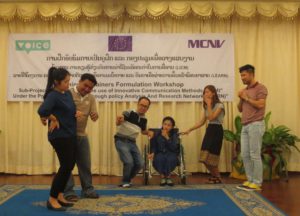
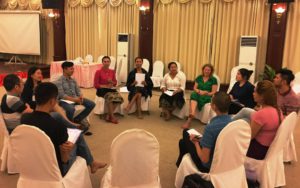
From 20th to 24th of March 2017, MCNV Laos organised a traning of trainers followed with a formulation workshop in Vientiane Capital to officially launch the project “Learning from the use of Innovative Communication Methods” (LICM). Participants to the event were 18 key persons from three project partners – Lao Disabled People’s Association (LDPA), Vientiane Youth Centre for Health and Development (VYCHD), and Proud To Be Us (PTBU), an informal network of LGBTI people in Lao PDR. Also attending the event were representatives of the National Institute of Public Health, University of Health Sciences, UNFPA and OXFAM Laos.

LICM is an action research project that aims to enable local partners to learn about the potential of creative methods in improving sexual and reproductive health and rights (SRHR) of vulnerable youth groups and as a tool to study specific SRHR challenges these groups face. Young girls working in garment factories, LGBTI people and disabled youth are the project’s target groups. The project also investigates if and how the use of innovative communication methods can enhance dialogue on SRHR issues between communities, vulnerable youth and policy makers.

The training of trainers has provided participants with basic techniques and insights about some forms of creative communication such as theatre, shadow drama and participatory video for peer learning, behavior change and advocacy in relation to SRHR issues. With more technical support from MCNV, the project partners (LDPA, PTBU and VYCHD) will formulate co-creative teams, develop creative communication products with different methods, organise communication events and involve policy makers in dialogue on SRHR issues.

Read more

Sexual and reproductive health and rights-education in Huong Hoa

Summer campaign

In the border region of Huong Hoa, there are 1900 teenagers with too little knowledge of sexual matters. Their parents also want to gain knowledge and self-confidence so that they are able to discuss delicate subjects.

Read more

Sexual and reproductive health and rights in Dien Bien province

Background

Youth in Vietnam, especially ethnic minority youth in mountainous areas, increasingly face health and social problems as a result of lacking the knowledge and skills of sexual and reproductive health and rights (SRHR). Vietnam has the highest abortion rate in the world, 83.3 abortions/1,000 women. In 2012, Vietnam had the highest incidence of new HIV infections in mainland South East Asia, and more than one-third of people living with HIV are under the age of 30. The HIV epidemic is growing most rapidly where education is poor, particularly in ethnic minority areas. Many of these problems can be attributed to a lack of comprehensive SRHR/HIV education for young people, who are not provided with the knowledge and skills they need to confidently and effectively protect themselves and others from unwanted pregnancy and infection. Only half of adolescents surveyed were able to correctly identify ways of preventing the sexual transmission of HIV. Young people increasingly engage in pre-marital sex and early marriage and childbirth are common. Poverty and remoteness limit access to information about SRHR. The little SRHR/HIV education available does not incorporate life-skills approaches. The effectiveness of health education programs are compromised by not being linked to quality youth-friendly SRHR/HIV services.

MCNV’s responses

To improve SRH in Vietnam, MCNV has strategies to support ethnic minority adolescents in improving accessibility of SRH education and services. We are now implementing a pilot project in Dien Bien called: “Open Door: improving access to sexual and reproductive health services for ethnic minority youths in Dien Bien high schools”. This three year project is implemented in two target schools, providing high quality life-skills-based SRHR/HIV education for ethnic minority adolescents, enabling them to make responsible choices and decisions regarding SRH and equipping them with the knowledge and skills to engage in safer sexual behaviors. This education is focused on ethnic minority youth in boarding schools and delivered through school-based youth clubs.

Technical guidance is provided by skilled SRHR health workers, teachers and women living with HIV. These clubs also aim to engage young people within the wider community outside the boarding schools, through a variety of innovative communication activities, such as drama, music and sports events. They also utilize social media channels to engage and communicate with young people. By doing this, the knowledge and skills of teachers are strengthened for better communication with young people about the sensitive topics of SRHR.

Future plan

In the future, MCNV expects to expand the SRH project to other schools in Dien Bien provinces and other provinces in Vietnam. After finishing the pilot project, the technical guidance for teachers would be published and introduced to education networks, from the national level through to district level. The work will also be distributed regionally, in particular through the new Adolescent Health Platform launched in Laos in November 2016.

Read more

Network of village health workers

Background

In the health system of Vietnam, village health workers (VHWs) are grassroot based that are closely connected with villagers and are often called the “extended arm of the health sector”.

VHWs are not employees of the government; they are local community volunteers who receive special training for their community health work. The network of VHW is an important component for providing health care at the village level. The VHWs link the commune health centres with the villagers. They live in the villages where they work and provide simple health care and counselling to people, most of whom they know. The services given by VHWs are very important not only for the villagers but also for the government health system, especially to reach the poor and those living in remote areas with limited access to quality medical care.

MCNV’s responses

For many years MCNV has been helping to develop capacity and improve the quality of work of the VHWs in the three provinces of Cao Bang, Phu Yen and Quang Tri. In these provinces, the VHWs have established their own organizations called the Village Health Workers’ Association (VHWA) which function as local NGOs. Currently, these VHWAs are forming a network of approximately 3,000 members. The establishment of the VHWAs came in response to the expressed needs of VHWs in the provinces to foster learning and sharing for professional capacity improvement. In addition, they make it easier to voice the concerns of VHWs and villagers at higher health levels.

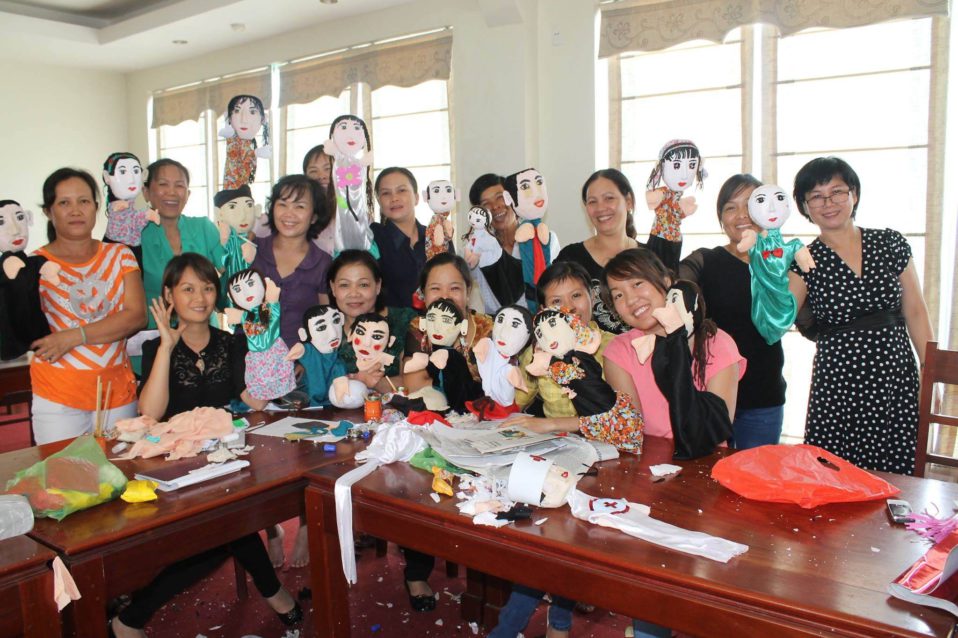
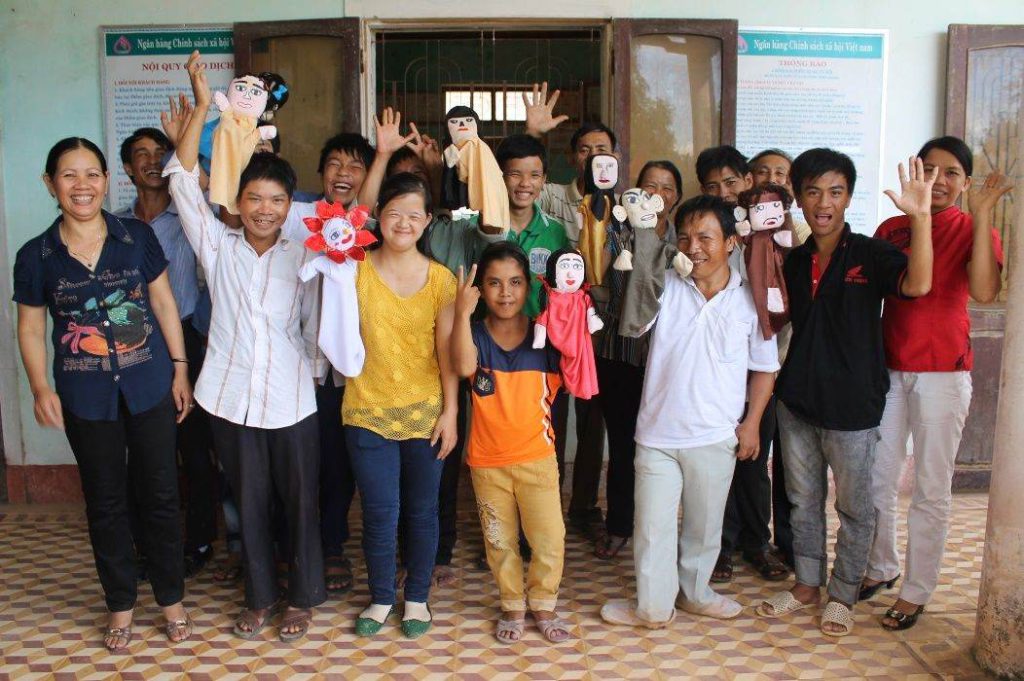
One of the most important tasks of VHWs is to give health educational communication at the grassroots level, as pointed out in Circular 07/2013/TT-BYT of the Vietnam’s Ministry of Health. To improve the quality of this kind of work, MCNV has helped the VHWAs learn and successfully apply many creative methods for behavior change communication (BCC). Some methods often used for BCC activities in the community include drama, shadow drama, folk composing and singing, participatory video, photo-voice and puppet shows. Although different in terms of techniques, these two-way methods of communication improve the interactions between VHWs and villagers and are applicable to almost any community health problem. The VHWAs now have good experience and skills in these methods, contributing to making people change their knowledge, attitudes and practices for better health in a more effective way. In the period of 2011 – 2015 the three VHWAs have used these methods to provide 807 communication events for different target groups and the communities, attracting the attention of over 26,500 people.
Achievements

The VHWAs are highly appreciated by local authorities and other organisations. For the past years the three VHWAs have cooperated with different organisations in the health sector, such as food safety departments, centres for HIV/AIDS prevention and district health centres, in community BCC actions. In Quang Tri, for example, the VHWA has trained groups of people living with HIV so that they can organize social events to communicate with villagers about HIV topics. The VHWAs also have good experience in working with ethnic minority groups in the border areas. One of the VHWA’s remarkable interventions is about using creative methods of BCC to communicate with groups of ethnic minority teenagers in some communes along the Vietnam – Lao PDR border, aiming at tackle the problems of unsafe sex practices and unexpected pregnancy.

The VHWAs also often train and collaborate with community based organisations, especially disabled people’s organisations, in using creative methods as a tool for expressions and life-skills development. In Quang Tri, the VHWA has been invited by other INGOs, including World Vision International and Handicap International, to provide trainings on creative methods of BCC for their partner organisations. In 2013, the VHWA joined in a consultancy mission together with MCNV to provide similar trainings to the UNFPA’s partners in Ben Tre and Hai Duong provinces. Earlier, the VHWA used to give such trainings for health workers and volunteers in Noong district, Lao PDR. In short, the VHWAs are now capable of providing technical support in creative BCC for health development projects/actions.

VHWs facilitated puppet making as a life-skills development activity for disabled youths

The working model of the VHWAs in Cao Bang, Phu Yen and Quang Tri has been reported to and appreciated by the Ministry of Health. These three VHWAs could play an important role in upscaling the model to other provinces in Vietnam in future.

Read more